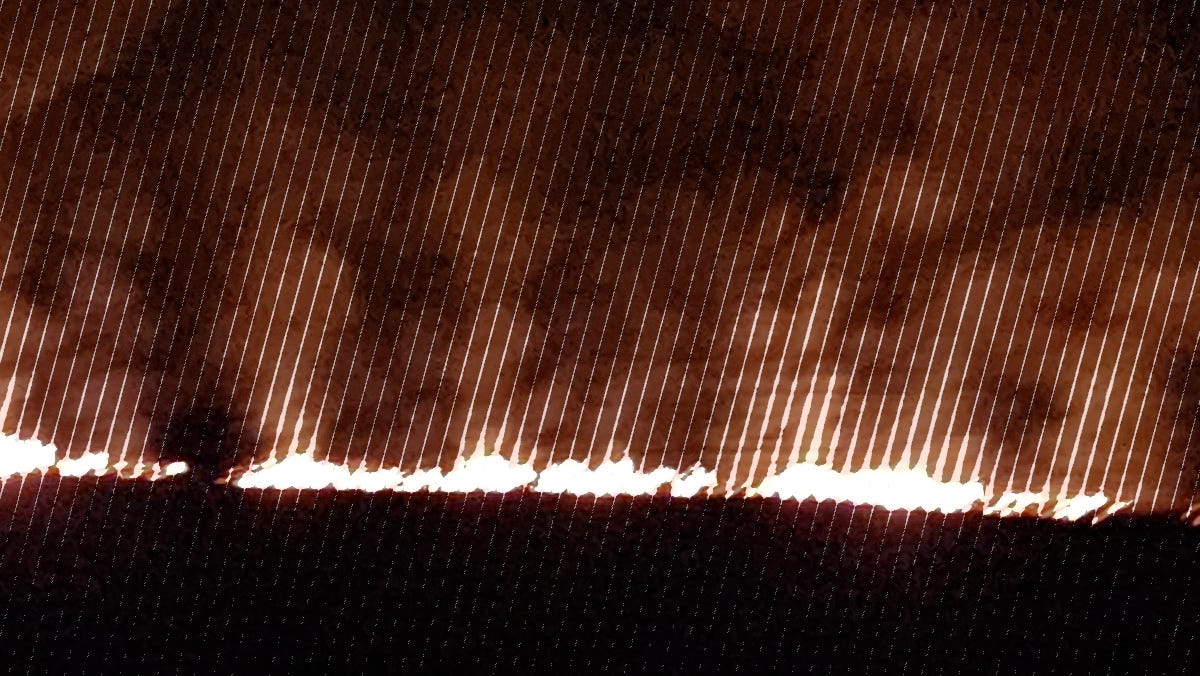
Wildfires in Nebraska this spring scorched a mind-blowing 820,000 acres of land, and the state says the damages were $9.7 million. That’s just $11.80 an acre, which seems just astonishingly low. For comparison, the 820,000 acres (which weren’t all contiguous, but which burned roughly simultaneously from the same basic causes) if treated as a single wildfire would have been bigger than all but two of California’s largest.
■ It’s an arresting amount of land -- bigger than Rhode Island. It’s about half the area of Ted Turner’s legendary holdings, which amounted to about two million acres (and whose disposition raises many questions with Turner’s recent death).
■ Yet the wildfires didn’t really make much dent in the public consciousness, and the request for disaster-relief funds won’t, either. The affected land area was enormous, but the number of people was not. We should, though, take away at least two issues for serious discussion by legislators.
■ First: Despite standing at the apex of wealth and capability across all of human history until now, the United States doesn’t have a consistent approach to emergency management. Disasters still too often sneak up on us, we too frequently make civil emergency response the problem of the military, and there’s far too much room for favoritism and abuse in the funding process.
■ Second: We are long overdue for some real innovation when it comes to wildfire management, especially on the very tricky urban/wildland interface. Big fires used to start inside urban areas and burn from the center outward (think of the Great Chicago Fire of 1871, one among many such fires of the period). Now, wildfires enter urban areas from the outside and cause ferocious emergencies (think of the disasters in Colorado, California, and Hawaii in recent years). Innovation is sorely needed!
■ One of the many problems with a superficial, us-vs.-them framing of issues in the modern “information” economy is that it’s hard to put attention on important issues if they lack an obvious partisan framing. It is similarly almost impossible to make headway on issues that take 25 or 50 years to solve when people have TikTok attention spans. We need progress not only on the problems, but on the problems that keep us from seeing the problems.