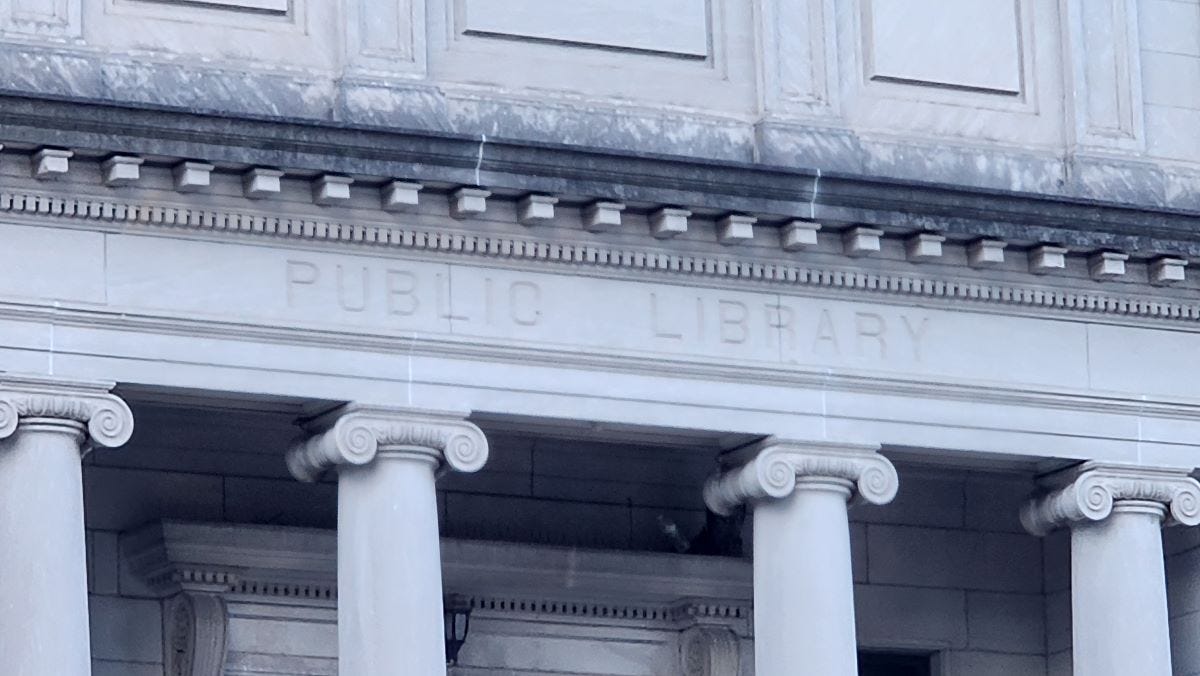
NASA is closing down the research library at the Goddard Space Flight Center in Maryland. A sizeable amount of archival content is going to be discarded as part of a 60-day review of the materials. There are those who have spoken up to oppose the closure, but it’s far from “Topic A” on most minds.
■ The problem, though, is that if material is hastily or uncritically destroyed without at least being first digitized, it won’t be recovered. There are lots of times when libraries and other archival institutions decide for prudent reasons that some materials are not worth holding anymore (this can, incidentally, create wonderful opportunities for second-hand buyers of discarded library materials).
■ What matters, though, is that caution is exercised to the fullest -- especially right now. There is no central clearinghouse of knowledge, no final gatekeeper of the facts. There are certain well-established high-authority sources in print, like the Encyclopedia Britannica or the Oxford English Dictionary, and high-credibility institutions like the Mayo Clinic and the Smithsonian that maintain high profiles with the public.
■ But the AI boom in particular has caused many other institutions to suspend any and all defensive perimeters about the sources of knowledge. Once hallucinated citations, imaginary sources, and outright misinformation have forged their way into any given “training set”, whether for a large language model or a real, live human being, then it becomes much harder to know what’s trustworthy without going back to original source materials.
■ Once you’ve baked a cake, there’s no reversing the process to get back to uncracked eggs and sifted flour. The Internet right now is mixing authentic knowledge from real source materials with synthetic content assembled by very convincing machines -- but the made-up content is working its way into the physical world, too. There have always been forgers, fakes, and fraudsters about, but they’ve never before had the tools of mass production on their side.
■ And that’s why now is a time for radical caution surrounding the sources of our knowledge. Libraries, archives, and other holders of raw data and original source materials need to be more protective than they have ever been in modern times. Some processes can be reversed, but for a lot of hard-won knowledge, the risk of contamination right now is unusually great.