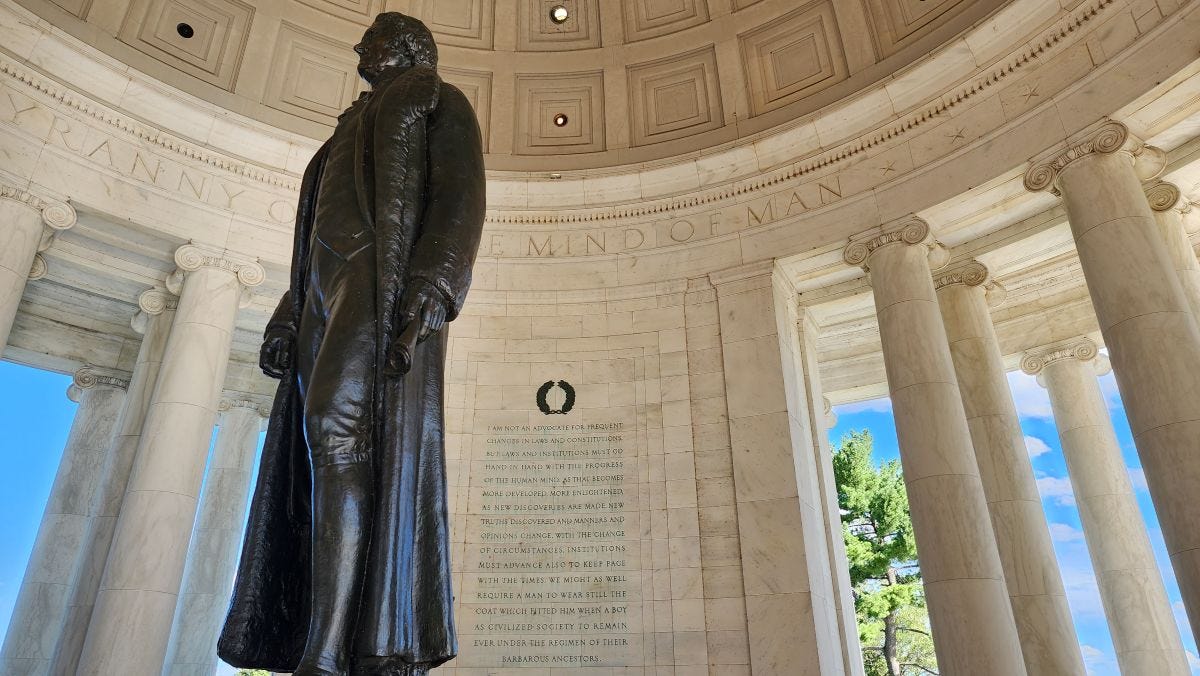
Even after 250 years, the Declaration of Independence remains a relevant and instructive document. Its catalog of offenses against the public is a laundry list of things about which to remain on guard even today: “He has endeavoured to prevent the population of these States”, “He has obstructed the Administration of Justice”, “He has affected to render the Military independent of and superior to the Civil power”, and “For cutting off our Trade with all parts of the world”.
■ Behind those complaints -- all quite justified -- is an underlying guideline for anyone who wishes not to be a tyrant (whether as a monarch or merely a manager). A book on leadership might label it “ABC”: Always Beckon Criticism.
■ Criticism, when genuine and legitimate, is a wonderful tool of improvement. The true critic is usually someone who cares authentically about the good of the institution he or she criticizes. In calling for something to be better, they reveal a deeper belief that the institution contains at least some underlying good.
■ An openness to criticism, codified in the First Amendment to the Constitution, is one of the key reasons America has succeeded for so long. Hostility to authentic criticism is a telltale indication that someone in a position of power is unfit to lead.
■ The smart leader isn’t just open to fair critiques, they beckon it, inviting the feedback that makes positive change possible. If we want to see a great experiment in civilization make it another 250 years, we should be clear to all: We’re not perfect, and we’ll never achieve perfection, but we can only steer towards something better if we always beckon criticism.