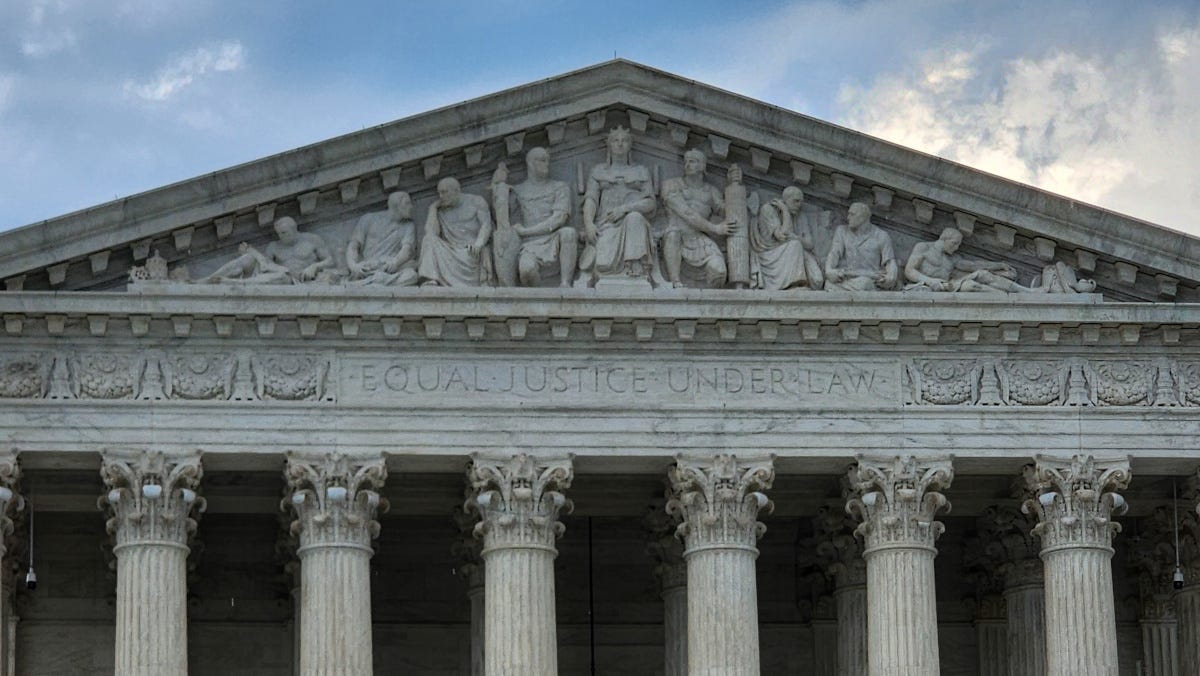
The Supreme Court’s decision to affirm the self-evident language of the 14th Amendment comes as a relief. Even if the decision was narrower than desirable, the Chief Justice assembled a majority under an opinion that “All persons born or naturalized in the United States, and subject to the jurisdiction thereof, are citizens of the United States and of the State wherein they reside” means what it says.
■ The opinion hinged on the notion that effectively the only children born in the United States who would not be “subject to the jurisdiction thereof” would be those belonging to very specific carve-out exceptions, like the children of foreign diplomats. It’s valuable that Chief Justice Roberts connected the notion of citizenship to its origins in British common law, noting that, “With protection came allegiance, and with allegiance came the status of a natural-born subject.”
■ Birthright citizenship establishes reciprocity of both rights and duties. Anything else is insufficient. We need not be selfish with citizenship, because it is not a one-way gift. It imposes burdens as much as it implies rewards, and none of us who are citizens should take our own view of those burdens so unseriously that we treat citizenship like a lottery prize.
■ Besides, we can prove with very little friction where a baby was born. It most often takes place with third-party witnesses around anyway, whether those are hospital employees, midwives, or other helpers. It takes much more to establish paternity, or parents’ domicile, or parents’ intentions regarding citizenship.
■ We, who implicitly proclaim that government is instituted to secure natural rights of birth in an uncertain world, ought to be inclined to look at every new birth on our soil as an opportunity to further buttress democratic principles, classical liberal ideals, and republican virtues. As the Chief Justice wrote, “Citizenship, then and now, was the right to have rights -- to freely participate in our political community.”