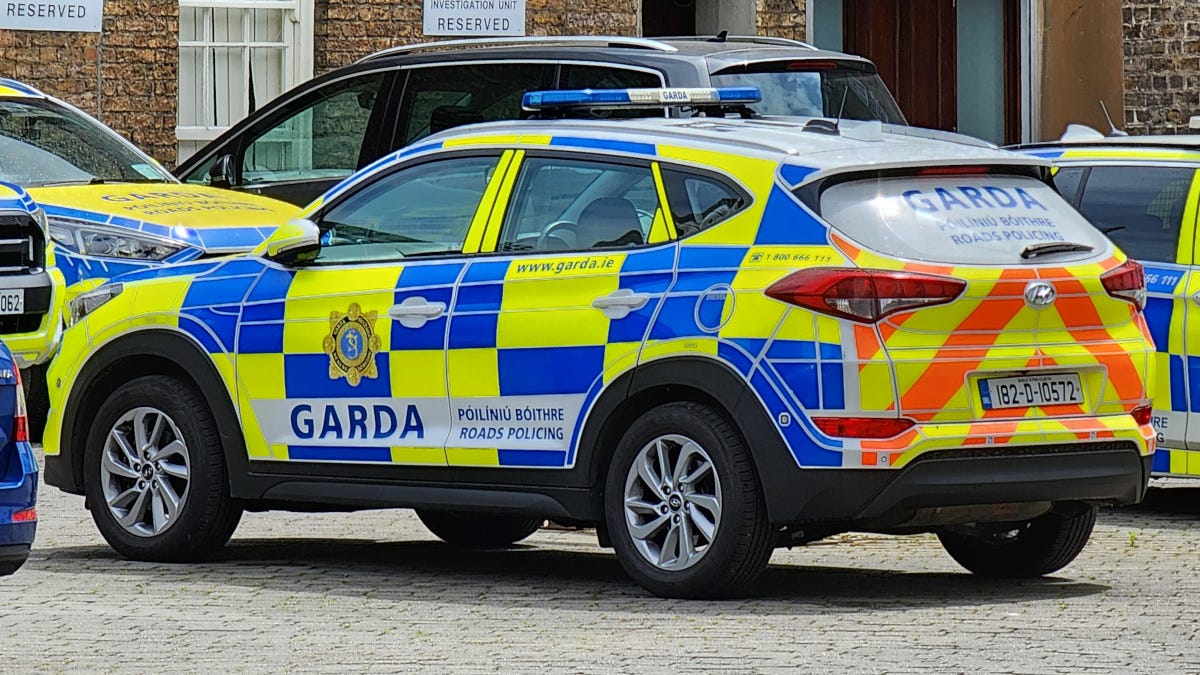
Ireland’s national police service, An Garda Siochana, has a history shaped in no small part by the struggle to assert independence from oppressive British colonialism. Having rejected a government that used force to abuse the people, the Irish chose to secure domestic peace and tranquility by steering away from force. It would be one thing to say the police exist to protect the public. Ireland goes much further, declaring that “Human Rights are the foundation of Policing”.
■ Their published “Decision-Making Model” says in no uncertain terms, “A core focus on Rights ensures that Garda personnel function within the context of national and international principles of democracy and of minimum standards for the protection of the rights and dignity of every human being.”
■ The service is overwhelmingly unarmed, again due to historical factors that made a heavily-armed domestic police force politically unpalatable. The result isn’t more crime -- the country proudly touts its #2 ranking in the Global Peace Index, and its murder rate is less than 1/8th that of the United States. The Garda have the trust of 88% of the public.
■ Ireland proves beyond any reasonable doubt that there is nothing incompatible about effective police work and respect for human rights. Indeed, if a person charged with enforcing the law cannot say with a straight face that “human rights are the foundation” of their work, then why ever would a self-respecting public entrust that individual with the legal authority to use force?