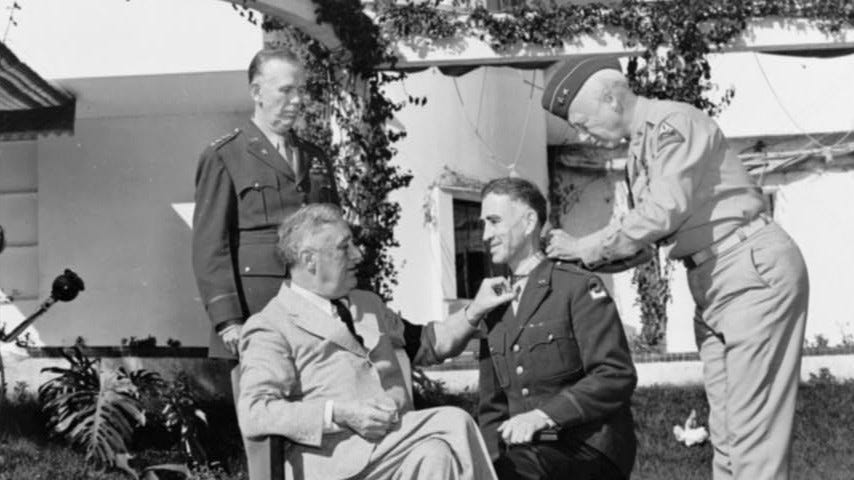
On December 8th, 1941, Franklin Roosevelt went before Congress to personally deliver an appeal: “I ask that the Congress declare that since the unprovoked and dastardly attack by Japan on Sunday, December 7, 1941, a state of war has existed between the United States and the Japanese Empire.” Though the power to declare war is lodged strictly in the hands of Congress, it hasn’t been exercised since 1942.
■ An appalling number of evils exist in the world, and many are committed by the governments of sovereign countries. Our instincts may naturally suggest that, since we have the world’s most fearsome military force, we ought to use it to correct those wrongs. In some cases, we should.
■ We should bear in mind, though, that the cause must be just, the process must be right, and the conditions for success must be favorable. Moreover, we must always be prepared to answer the question, “And then what? What happens next?”
■ Following the thoroughly righteous victory of Allied forces over the Axis powers of World War II, the United States undertook the spectacularly ambitious (and expensive) Marshall Plan to rebuild Europe and imposed a similarly long and complex occupation and reconstruction of Japan. Both efforts lasted longer than the war itself.
■ A just cause, a correct (and open-eyed) process, and a strong chance of victory are necessary conditions, but they are not sufficient, since the cleanup always takes longer than the fight. There is no substitute for a careful and complete answer to “Then what happens next?”.