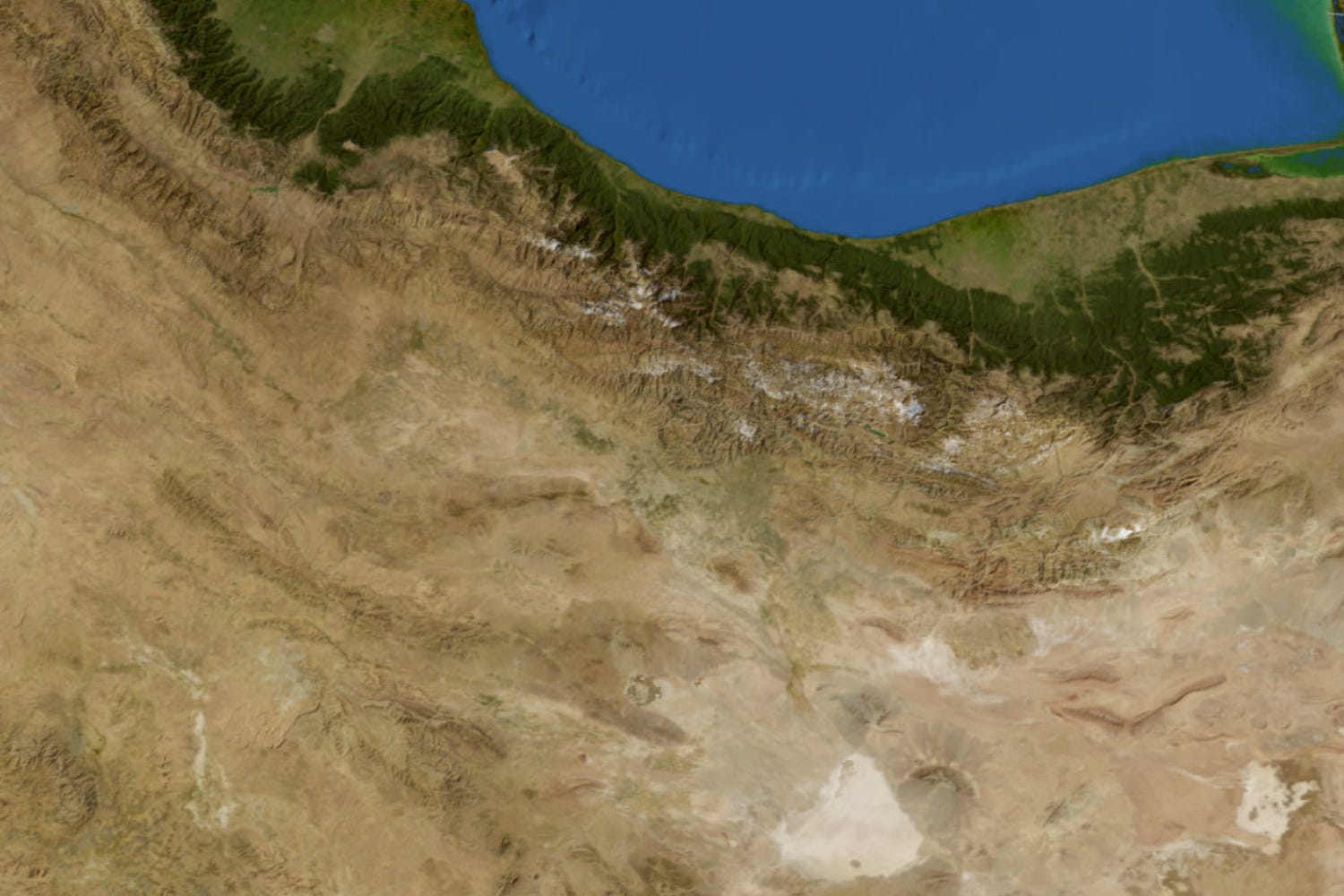
The city of Tehran doesn’t often enter the American public imagination, but it’s an enormous place with an estimated 14 million people living in its metropolitan area. What happens there is consequential simply by virtue of the number of lives affected. And right now, they are being affected by a dramatic shortage of drinking water.
■ Water rationing has been imposed, but only to limited success as rainfall has been extremely scarce this year. The president of Iran has gone so far as to say, “If rationing doesn’t work, we may have to evacuate Tehran”.
■ That was almost certainly an exaggeration for dramatic effect, but the fact is inescapable that it is impossible to sustain a large urban population without reliable water supplies. Concern has already been raised by the depletion of above-ground reservoirs, but the bigger problem is that the preponderance of Tehran’s water comes from underground, and those aquifers are not recharging adequately. (That’s what often happens in the midst of sustained, multi-year drought).
■ Urbanization is an irresistible trend most everywhere in the world: The prospects for cities are growing vastly faster than for rural areas. That’s not going to change. Even if the global population levels out, the trend towards cities isn’t going anywhere. This will absolutely demand strategic planning and thoughtful policy management to ensure that cities don’t collapse under the weight of drought.
■ On balance, urbanization will be good for human health and longevity. Cities mean access to medical care, diets supplemented by diverse ingredients obtained through trade, and access to quality sanitation techniques. But the pressures that come to bear when drinking water becomes scarce are more than even a competent and responsive government can generally handle. A government that is incompetent or unresponsive to public pressure will fare even worse.