Heeding Warren Buffett’s advice to “Be fearful when others are greedy, and greedy when others are fearful”, the time seems quite right for an extra-sober assessment of work from a contrarian perspective. So much money is being spent on data centers to run artificial intelligence that it’s tilting the balance of GDP growth. Without the feverish spending on computers, the economy would basically not have grown at all.
■ And what is all this spending being done to produce? In essence, the appearance of knowledge. This isn’t to denigrate an entire class of machines or their human technicians, but the evidence has been piled up pretty high to show that in many cases, at least with generative artificial intelligence based upon large language models, what we’re getting as outputs is mainly good at looking like intelligence, far more than actually exhibiting the thing itself.
■ The temptation to copy the outputs and pass them off as original thoughts has already ensnared many a user. The answers these tools generate are often plausibly correct, and even when they aren’t, they at least tend to be written in such a way that they seem convincing (at least to the reader who doesn’t know any better).
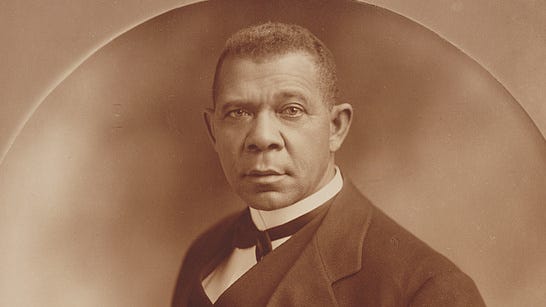
■ This isn’t the first time that copying work has been a high-grade temptation. Nearly 125 years ago, Booker T. Washington lectured his students at the Tuskegee Institute, “We carry a similar kind of deception into our school work when, in the essays which we read and the orations which we deliver, we simply rehearse matter a great deal of which has been copied from some one else. Go into almost any church where there is one of the doctors of divinity to whom I have referred, and you will hear sermons copied out of books and pamphlets. The essays, the orations, the sermons that are not the productions of the people who pretend to write them, all come from this false foundation.”
■ The easier it becomes to at least appear as though one possesses a great deal of knowledge, the more important it becomes to emphasize the strengthening of character: Taking ownership of what one actually knows, giving appropriate credit when answers have come from others, showing modesty instead of bluffing overconfidence. The appearance of access to “intelligence” is going to tempt a lot of people into really ill-advised behavior.