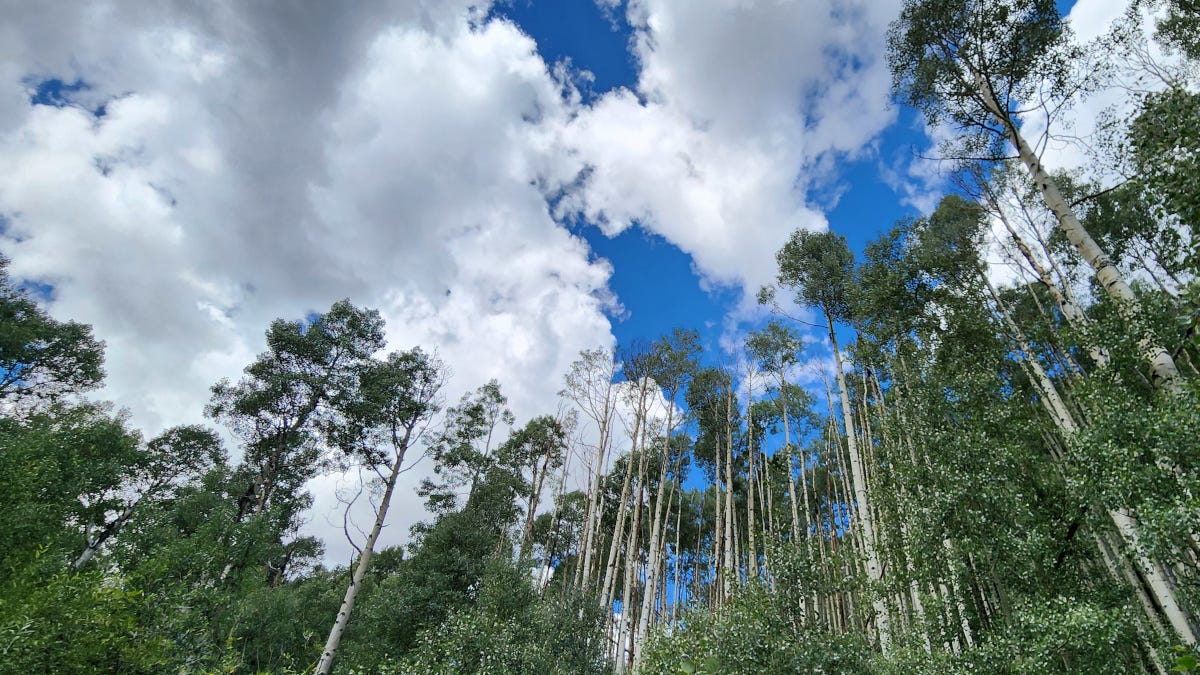
It doesn’t seem like we should still be naive about basic scientific matters like thunderstorms and forests, but the American Geophysical Union recently announced a novel scientific discovery: That trees show weak electrical discharges during thunderstorms. It’s been speculated for some time, but the actual documented observations are completely new. A Pennsylvania State University team figured it out by simulating the effect in the lab and then documenting it from a modified Toyota Sienna in the field.
■ The bottom line to the effect seems to be that the electrical charge may damage sensitive parts of the tree, so trees may have evolved around it to preserve themselves. But possibly more interesting is that it means that a forest in a thunderstorm glows -- but in a way that human eyes can’t see.
■ It’s easy for us to forget that there are lots of phenomena that we can’t detect with human senses -- some animals can see ultraviolet light or echolocate in frequencies we can’t hear. And there’s no end to what we’re missing throughout the electromagnetic spectrum.
■ So what if we can’t hear porpoises gossiping in ultrasonic frequencies? Or that we can’t tell what dogs are sniffing from one another every time they go outdoors. It’s not important that we have all the answers, but it would be wise for us to touch base with our humility once in a while, to acknowledge that there are lots of things that escape our detection yet are just as real as anything we can see or hear. Sometimes it’s just good enough to remember that we are far from omniscient.