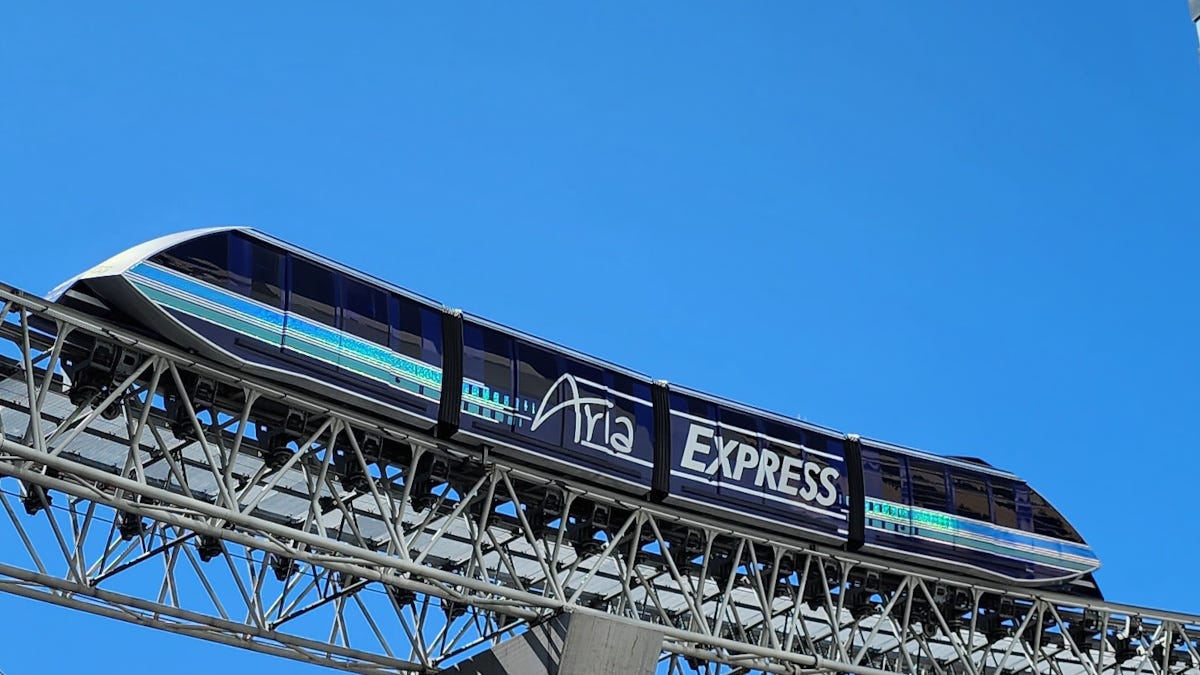
The one-two punch to make rail travel work in America (if it ever will again) really does have to be the combination of very high speeds (at least three times faster than highway travel) and impeccable reliability in all weather conditions. That probably means the only real solution is an extremely fast suspension railway -- something that could be constructed without any travel at grade (for safety) and with the actual rail surface sheltered from weather conditions (meaning the trains could run in ice, snow, rain, or wind that can ground air travel).
■ A German installation of this type has support pillars spread about 100’ apart, which could theoretically allow a system to be built within the easements for existing Interstate highways. Compared with conventional rails, suspended rails are extremely compact on the ground: They can go in the airspace right over the highway. If it works in high-density Japan, surely it can work within existing land already set aside for American highways.
■ Moreover, with supports typically spaced about 100’ apart, suspended rail systems have the capacity to overcome difficult terrain in much the same way that high-voltage power lines do. (Which is also a good place to note that a suspended rail system would almost certainly run on electric power.)
■ But the German version is slow with a top speed of 31 mph. It would need to go seven times as fast to really make any sense in America. China has a 37-mph edition, and Japan has a version that travels at 47 mph, but that again is much too slow for American needs.
■ Could it be done? Undoubtedly the technology is within reach. What it requires is sufficient popular and political impetus to make it seem like a project worth undertaking. The more unreliable air travel becomes (for whatever cause), the closer that day may come.