In a social-media post about the outbreak of hostilities in Iran, a member of Ireland’s Dail (the national legislature) inadvertently makes a very good case for American Federalism. Ken O’Flynn’s post says, in part, “The UK has issued clear advice to its nationals. They have been told to register their presence and stay in close contact with their Foreign Office. Irish citizens deserve the same clarity from our Government.”
■ The United Kingdom is a country of just about 70 million people, with a long history of empire and institutional coordination overseas. Ireland has about 5.5 million people, and though Ireland is rich, it has a far less sprawling history across the globe.
■ But because the two countries are geographically close, share a language, and have lots of communication with one another, it doesn’t sound odd for a legislator in Ireland to say that his country ought to have government services that are comparable in quality and scope with those of a neighbor nearly 13 times larger. It merely sounds like a politician finding an issue that has a plausible chance of sticking to his rivals.
■ Ireland has about as many people as South Carolina, while the UK has about the population of California and Texas combined. Fortunately for South Carolina, California, and Texas, the United States is governed so that state-level officials can largely outsource questions of diplomacy and overseas affairs to the national government, and instead focus on issues closer to home.
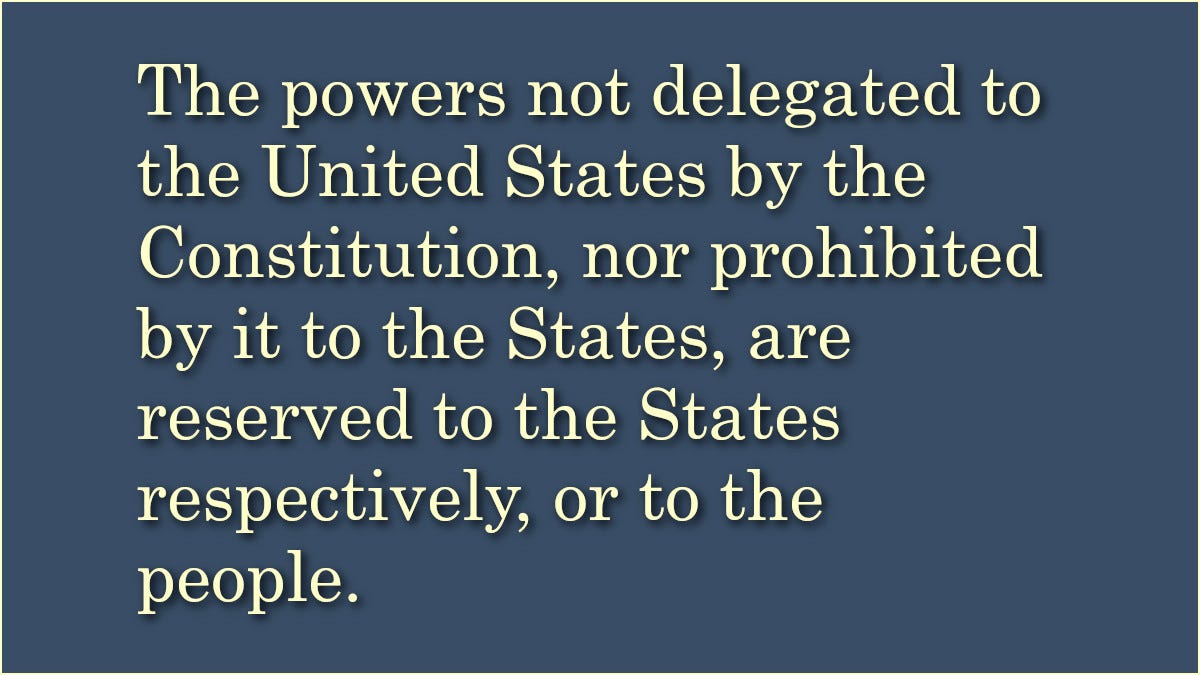
■ But a case like this is a good reminder that there is a great deal that the Federal system can and should leave to the states -- just like the 10th Amendment expressly orders it to do. Leaders in South Carolina, California, Texas, and indeed all of the other states are perfectly capable of looking at the policies and outcomes in the other states and adopting or adapting as they see fit.
■ Competition for good policy-making is almost always good for the public. So is the discretion for most policies to be decided as close as possible to the people affected by those policies. Efforts to nationalize too many questions, rather than handling them locally, is a recipe for unnecessary tensions, policy uncertainty, and legislative gridlock. Healthy competition shouldn’t be exercised in the world of sports alone.