A project by the Pew Research Center found that link rot has killed two of every five pages that were on the Internet in 2013. Whether the pages have been taken down entirely, moved, or simply neglected to death, the point is that they are there no more -- at an appalling rate of disappearance, considering the centrality of the Internet to our daily lives now.
■ The loss of information to the sands of time has been a problem throughout human times. Historians are forever trying to piece together fragments of artifacts in order to reconstruct lost knowledge of the past (consider the significance of the Dead Sea Scrolls or the excitement over the “reading” of scrolls once damaged by the eruption of Mount Vesuvius).
■ Some information has always been allowed to fade away; we know what ancient people thought was important because they did things like chiseling it in stone. But we have made the largely unconscious decision to store most of our contemporary information online, often unconsciously assuming that digitality equals permanence, even without any reason to believe that. It wouldn’t be so potentially dangerous an assumption if we were still fanatical about creating permanent records.
■ Unfortunately, we are not. A great example: The Statistical Abstract of the United States, which was published from 1878 until 2011 to provide a comprehensive look at Census data. But the publication was terminated, presumably because of the assumption that “all the information is online now”.
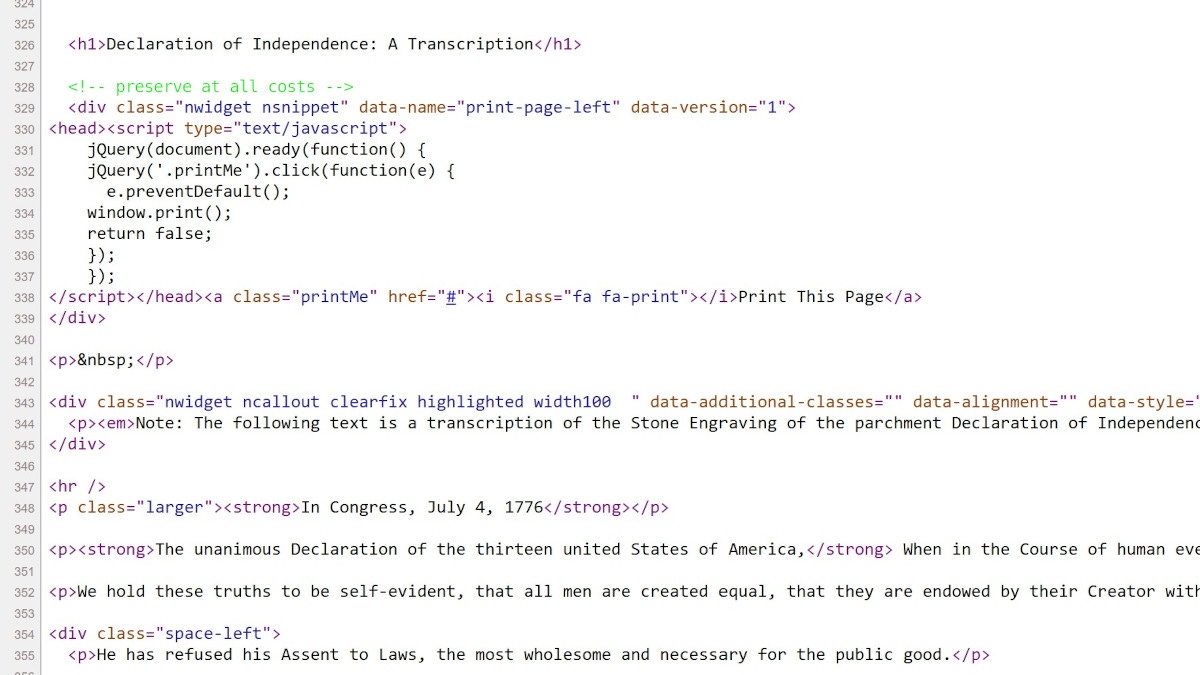
■ What we’ve failed to do amid all this flattening of information (and information access) is to distinguish what content really needs to be permanent from that which can be forgotten without regret. There is no special HTML code for “Preserve this content at any cost”, even though there is content utterly deserving of such a flag. And now, with artificially-generated content “killing the Web” right before our eyes, the consequences of failing to draw the proper distinctions are arriving even faster than anticipated.