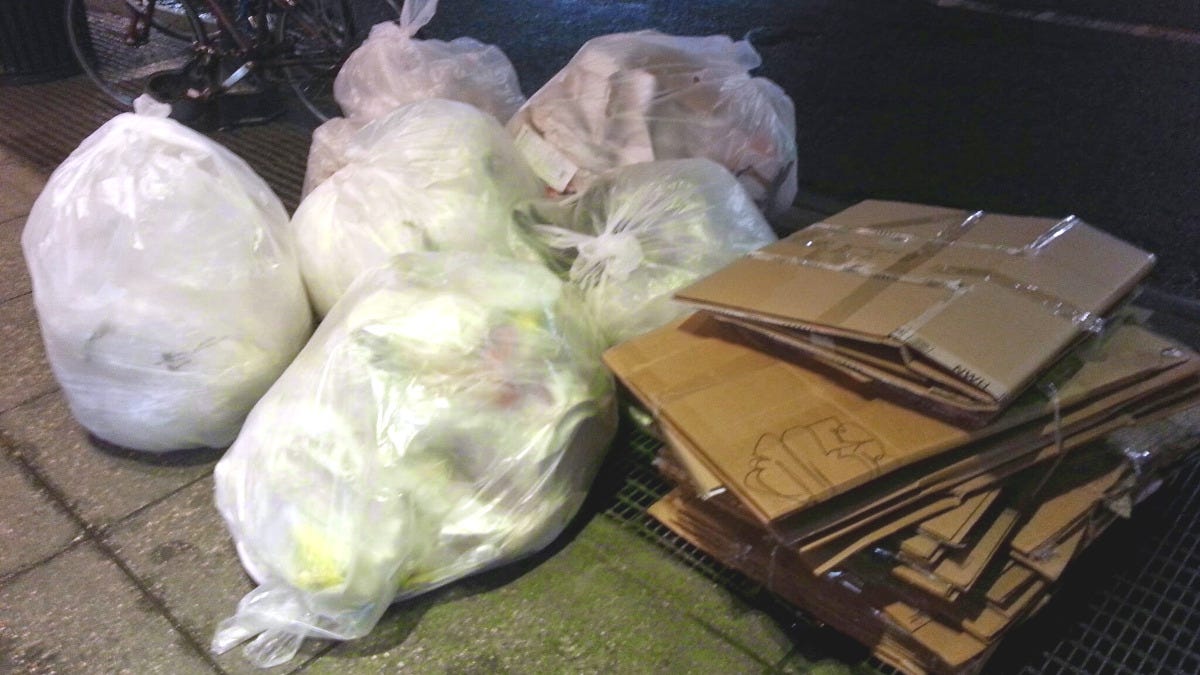
New York’s mayor is making social-media highlight reels out of his campaign to introduce a containerization program for the city’s solid waste collections. These “Empire Bins” are electronically locked and are supposed to fight rats.
■ Keeping large urban areas sanitary is a problem of great importance and it’s never permanently solved. As we adapt and evolve, so do other parts of nature. Trash containerization has some obvious appeal, considering the way trash bags literally pile up in New York. No plan is perfect, and there are reasons both good and bad to oppose the Empire Bin project.
■ Good reasons? The project will cost $162 million, take scarce parking spaces out of service, and could hinder access to fire hydrants and utility access points (like manholes or valve boxes) in curbside areas.
■ Bad reasons? Because some people think “New York’s streets are entropic. Nothing here can exist without promptly getting bashed in, graffiti-ed, or splattered with swill.” This attitude, ranking somewhere between defeatism and pure cynicism, opens up no space for a better solution.
■ Amsterdam already has low-profile underground garbage compaction systems that store far more volume than is visible at street level. Could the same be done for New Amsterdam? It’s not impossible to imagine, though it would take a kind of mentality of urban innovation that hasn’t been in great supply.