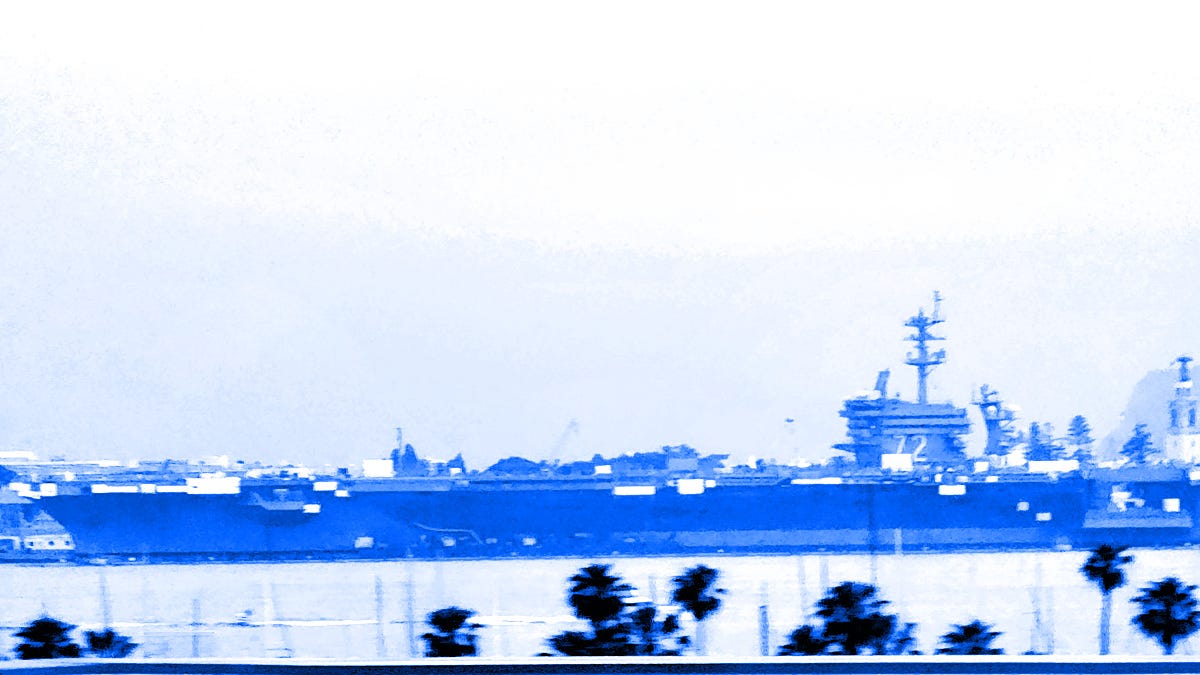
Reports of serious deterioration of conditions and morale aboard the USS Abraham Lincoln have been reported in credible sources like the Navy Times and Stars and Stripes. Those reports would be dangerous to ignore and even worse to dismiss.
■ Social conditions like crew morale may be mostly subjective, but it’s objectively true that the aircraft carrier has been deployed for more than eight months, longer by a quarter of a year than originally anticipated.
■ Everyone’s choices are bounded, in part, by the appeal and availability of alternatives. The people on board an American aircraft carrier are specialists and technicians, not mere drones (in the sense of bees, not UAVs). They are the products of a sophisticated, all-volunteer military force in a technologically advanced age. They are people with other options.
■ Of course, part of the promise of service in the military is fair pay and transferable career skills. But, even more than that, we implicitly promise character: That a veteran with an honorable discharge leaves with more character than the newly enlisted or commissioned recruit. But character isn’t a one-way projection. It acts as a mirror, reflected off the surrounding people and environment.
■ If we want an honorable fighting force, high-quality recruits, and an effective defensive shield in a world of ambitious adversaries, then we (through our elected officials) have to ensure that both environment and leadership rise to the level that will form the right outcomes. If those fall short, then it’s imperative to change course before it’s too late.