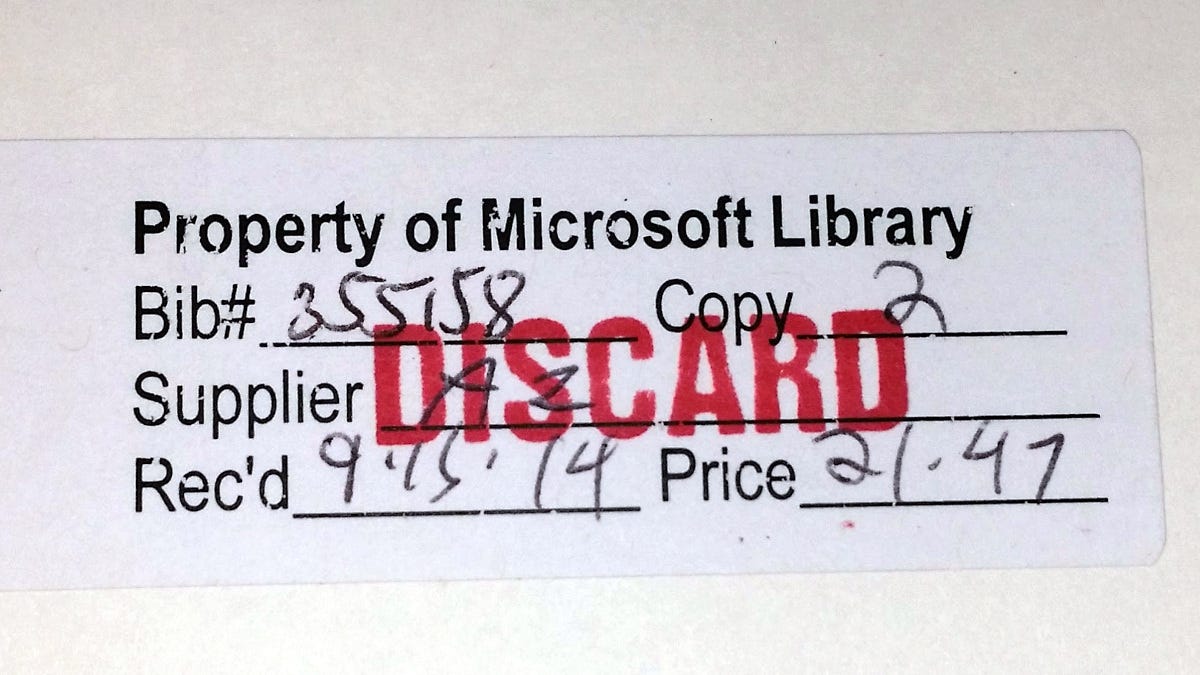
Sometimes, an act is both objectively bad on its own, and also perfectly timed as a metaphor for something much larger. One such example is the practice of “destructive scanning” undertaken by at least one company developing a large language model -- and quite possibly undertaken by others, too. This choice, to scan physical books and then destroy the paper copies, is a serious affront to people who appreciate books as meaningful physical “source code” for human knowledge.
■ Unlike what’s found on the Internet, what’s found in a physical book can be demonstrably identified with both place and time. A first edition isn’t just identifiable by what’s printed on the copyright page (though that alone is an important artifact), it can also be traced by such evidence as paper quality, ink types, type faces, and “Ex Libris” markings or due-date slips. Books, like fine art, can be traced with a provenance. Physically destroying a copy just to “transform” it for copyright purposes is an act worthy of heaping piles of scorn.
■ But this act of destructive scanning is also a sharp metaphor for the way some people think about their own behavior, particularly in the sphere of public affairs. All too many people say anything in the moment to attract a maximum of attention, assuming that the track record of their words -- like those books -- will be destroyed and rendered unaccountable as those words are subsumed into the larger “model” they’re trying to feed.
■ The offenders in this case aren’t necessarily large in number, but they are dismayingly influential. In their Twitter feeds and TikTok streams and other channels of disinformation, they lie, copy, manipulate, exaggerate, fabricate, and instigate, usually for shameless profit and crass influence. Most of them are young enough to expect decades of life ahead of them -- decades during which, historically, they would have been forced to reckon with their earlier words.
■ In the “destructive scanning” universe, though, they say whatever they can to move the needle or attract clout, with no more regard for the consequences of their words five days, five years, or five decades from now than most people devote to what happens after they wash dirt off their hands in a bathroom sink. Words matter and ideas have consequences, but some people are living as if they are shielded from any shadows of the past. They will be proven wrong, sooner or later. But the damage they’ll do in the meantime is nothing to ignore.