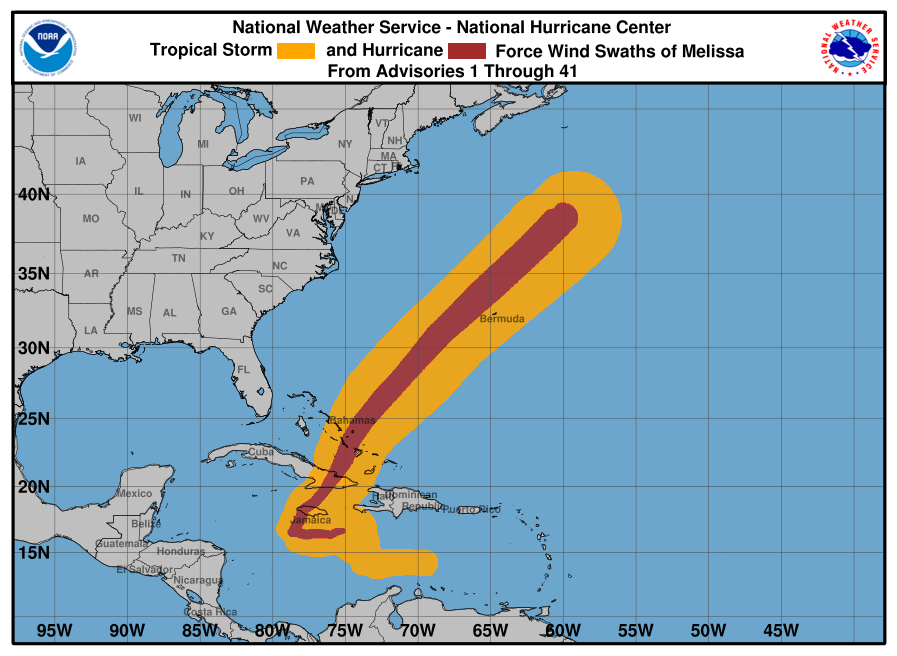
Considering the devastation wrought by Hurricane Melissa as it crossed Jamaica, it’s not particularly surprising that the event has revived a small debate about whether to add a special “Category 6” to the Saffir-Simpson hurricane scale. Big events measured by an open-ended scale certainly open the door to further examination.
■ But adding a Category 6 to the mix would almost certainly represent a counterproductive form of mission creep. The Saffir-Simpson scale is somewhat subjective as it is, having been introduced in 1973, before today’s very good tools for measuring other values with precision had matured for the purpose. We now can measure values like wind speed, barometric pressure drop, and storm surge with a reasonably high degree of confidence.
■ The value of the existing scale and its category ratings is mainly prospective: That is, “There’s a Category 5 hurricane coming! Evacuate now!” is meant to convey actionable information to the people in the storm’s path. We have detailed projections of the damage that could occur at each level of wind speed.
■ For truly informative purposes on a scientific basis (including insurance and government policy-making), the actual data (including wind speeds, but not limited to them) matters more. Anyone who chooses not to act in the presence of a Category 5 storm is unlikely to be motivated by calling it a Category 6. And for everybody else, what matters is the actual data.