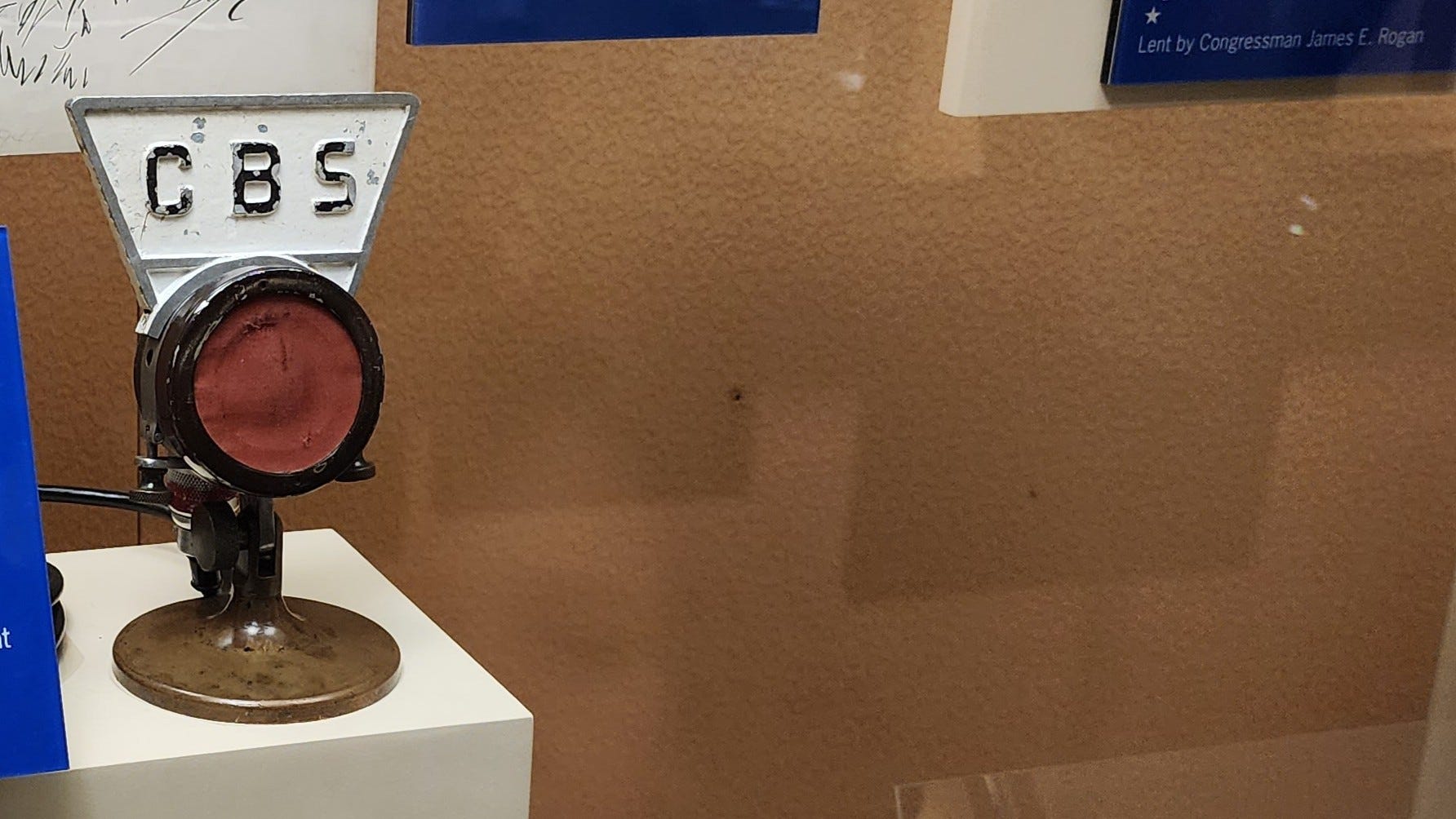
In one respect, the announcement that CBS News is closing down its radio news division is little more than a business decision. Radio news struggles financially in a world where on-demand content satisfies much of the demand for speech-based programming that long could only be found on news, talk, and full-service radio stations.
■ If a “news/talk” radio station is putting out 16 or 17 minutes per hour of advertising while a podcast carries a fraction of that (and can be paused, restarted, or fast-forwarded on-demand), then it’s inevitable that listeners will drift away. What’s bad for the stations carrying network programming (like news bulletins) becomes bad for the networks.
■ But the closure of CBS News Radio is something more than that: It’s an act of vandalism against a storied institution. You wouldn’t keep it open just because it was once the home of Edward R. Murrow -- but that history should play a part in the institutional self-respect that CBS Radio News should carry today. It’s not just nostalgic that the World News Roundup has been running continuously for more than 80 years, it’s a self-reinforcing standard within a profession like journalism: Don’t screw up your work today, or you’ll be the one who brought shame on a legendary broadcast.
■ Institutions don’t deserve to survive just for their own sake, but the people entrusted to run them should have enormous respect for the duty to keep them vibrant, relevant, and well-adapted to the future. Traditions don’t just matter to historians; they inform how we conduct ourselves in the present.
■ On balance, we should reasonably guess that old institutions at the very least contain the artifacts of decisions reached through trial and error -- a costly way of learning, but one which humankind seems intent on using above all others. As it has been said before, we can’t create new old institutions. And if it looks like someone who was managing an institution let it decay, wither, or slip, then that failure ought to bring them shame.