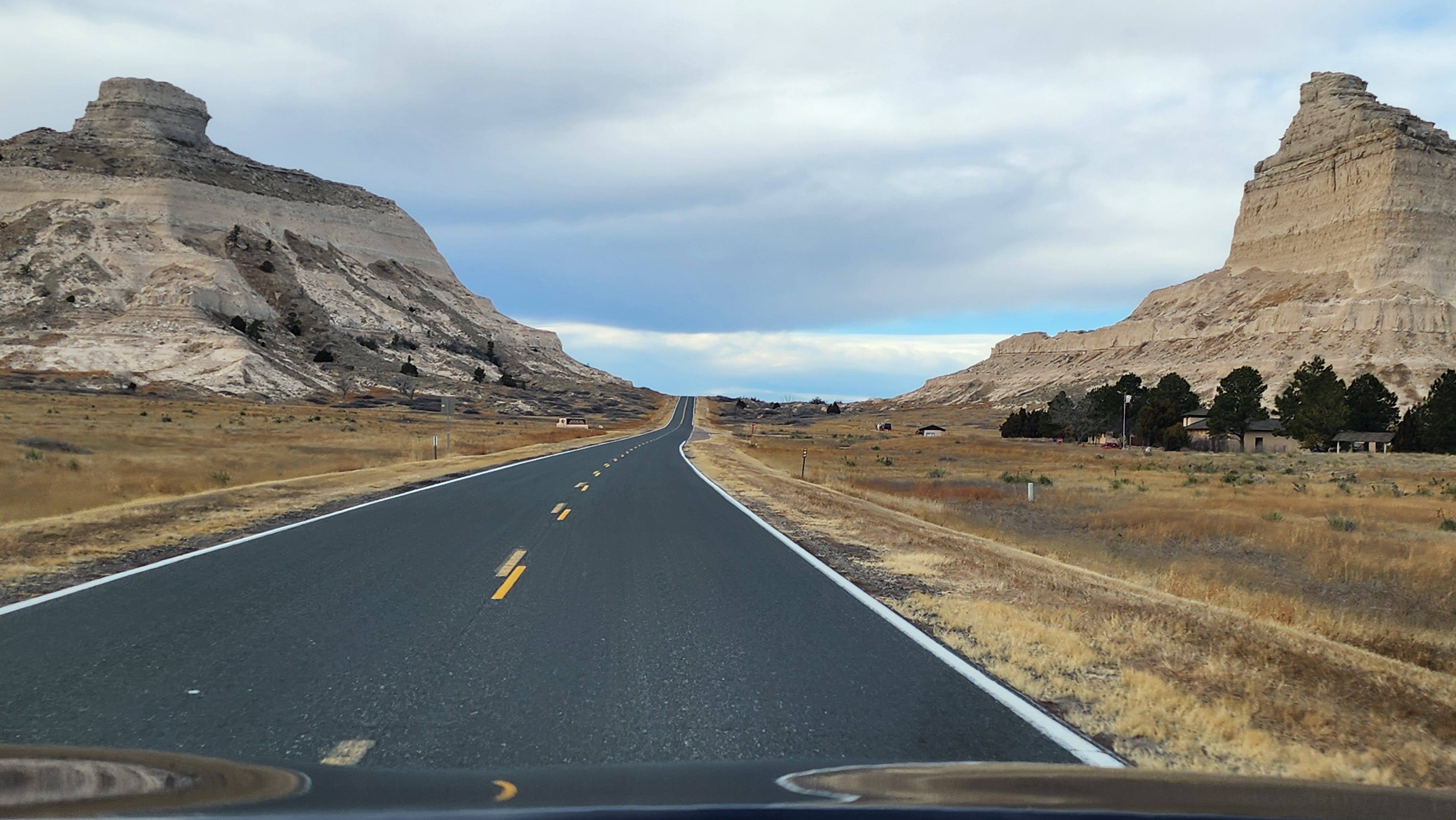
A somber story in Nebraska’s Flatwater Free Press tells of the closure of the last country school in Scotts Bluff County. It’s not a high-profile place, though some may recognize it from the Oregon Trail and other historical themes of westward expansion -- the legendary Chimney Rock stands just outside the county’s borders.
■ The school is closing due to a number of familiar refrains: The student population has been declining, the cost to keep a school open continues to rise, and a variety of public pressures (from local taxpayers to the state legislature) offer resistance to finding more funding. As with so many other places, the community considers the school a fixture of its identity, and closing the school is a harsh blow to that sense of place.
■ Nothing really can be done, however. Baumol’s cost disease remains basically undefeated, and tiny schools are not going to escape emotionally-charged closures without huge changes.
■ One possible change would come in the form of a massive overhaul to their funding models, which seems unlikely, considering that every tax expenditure needs a constituency and the core of the problem is the lack of a population big enough to form such a constituency.
■ The other possibility is a sea change in the cost of delivering instruction. There are few plausible scenarios here, either, but one possibility looks like a shift to outsourced instruction, delivered mainly by personalized online connections, but supervised by one or more roving tutors who could pitch in to help when and where needed.
■ If routine classroom instruction can be largely outsourced, tiny schools just might be able to afford to keep the lights on by having teachers supervise larger numbers of students while someone else delivers the classroom material. By consolidating classes (and grade levels) together, the schools might be able to reach the necessary critical mass of students to teachers in order to afford an in-person experience, perhaps with rotating assignments for additional teachers to supervise unavoidably hands-on activities like science lab sessions or gym classes.
■ It may not meet anyone’s standards for an ideal experience, but not much else is likely to work. As long as educators are expected to have four-year college degrees, their salary expectations will be moved along (to at least some degree) by the pay received by people with comparable levels of schooling. The only way to level out this “cost disease” is to find new sources of efficiency (i.e., by getting more classroom instruction per hour of teacher time by having students get most of their instruction online) or to gladly accept an ever-rising cost to keep schools open.