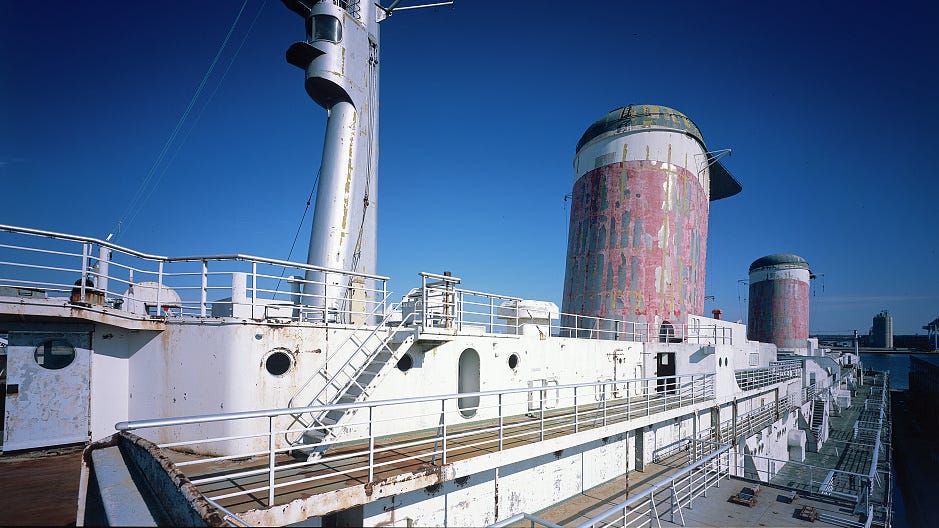
Anyone looking for a most incredible Internet rabbit hole ought to visit the Facebook page titled, “SS United States: An Operational Guide to America’s Flagship”. It’s an endlessly detailed discussion page full of photographs, content, and even debate about the SS United States, which at one time was the fastest passenger ship in the world.
■ The curators of the page and its followers (numbered in the thousands) don’t hesitate to discuss the ship’s history in long, detailed threads. The Facebook page is an adjunct to a 216-page book on the ship, but it acts much more like a forum than a pure marketing tool. The people populating it are nerds -- a term of endearment for those who take an enhanced level of interest in subject-matter knowledge for recreational reasons. Every civilization has nerds and every civilization needs them, desperately, even in the best of times.
■ A serious social worry we should reasonably have right now is that the proliferation of junk books, articles, and online content written by unaccountable and unreliable artificial intelligence programs are going to fundamentally and irreversibly pollute the world’s reliable base of historical knowledge. Writing a well-documented, carefully-researched history of a subject like the SS United States is time-consuming and costly (if in no other terms but the opportunity cost of doing something else).
■ It would be cheap and easy to artificially generate a completely fabricated history of the same subject -- complete with convincing photograph-like images -- and sell it as a competitor to the authentic, human-written original. Once a market for a real thing is revealed, the market for imposters, copycats, reverse-engineered imitations, and opportunistic rip-offs is rarely far behind. And the cheaper the knock-off, the greater the potential for profit-making. The world of books is already plagued by them, and large language models are making the problem exponentially worse.
■ That’s a completely upside-down incentive structure for society’s interests, if reliable knowledge means anything to a civilization at all. It may become much harder to sort good information from bad in the very near future, and it’s going to be up to the nerds of the world to save us. It’s going to be an extraordinarily heavy lift.