Americans like having stuff, and even though our houses are bigger than ever, they often still don’t have enough room for all of the stuff we want to keep. So many of us turn to rental storage units, which dot the landscape all over.
■ Self-storage facilities tend to have three interesting characteristics: They’re usually fairly close to population centers (nobody wants to travel too far to get to their stuff), they’re generally broad and flat (the simpler the layout, the cheaper to construct), and they’ll tend to be found in the neighborhoods on the lower half of the local rent scale (near things like railroad tracks and highways, rather than where the land costs more per square foot).
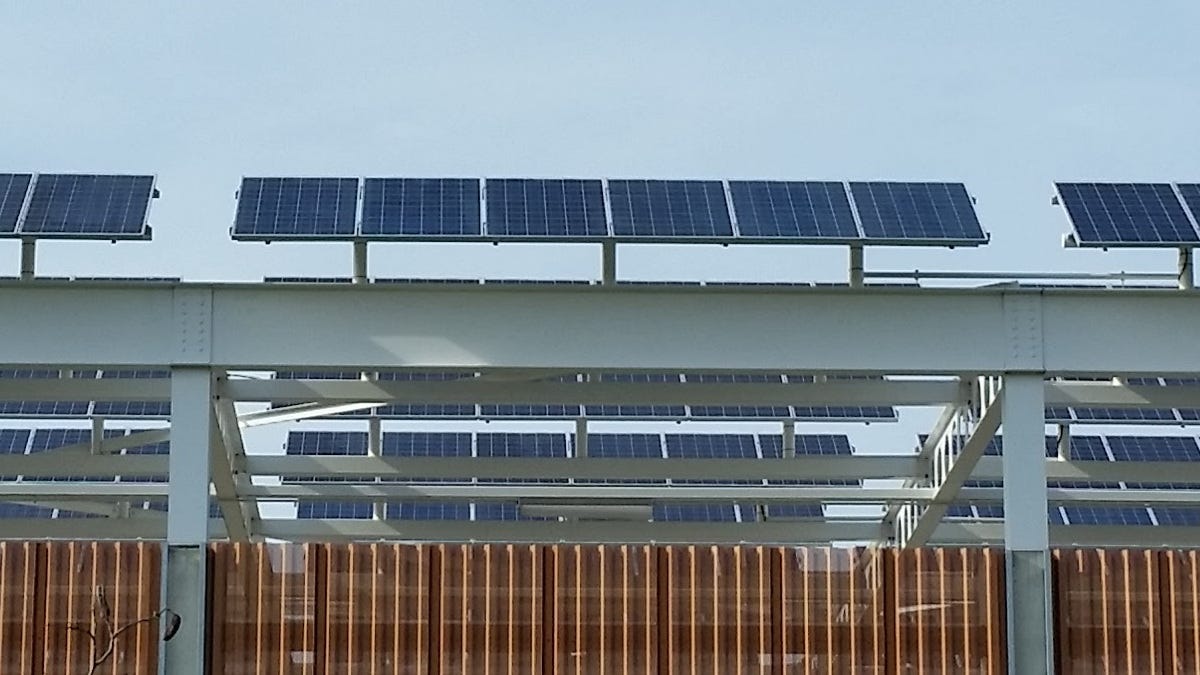
■ Commonwealth Edison (or ComEd), the largest electric utility in Illinois, has found an interesting way to make those storage facilities more useful: By putting large rooftop solar sites on them. One of the characteristic properties of a market economy is that it rewards moving things from lower states of value to higher ones, and this is a very clever way to make otherwise unproductive roof area into something useful.
■ It’s hard to think of a single drawback: Community-level power generation is good for the utility because it reduces transmission losses (especially nice when it can be done renewably, without generating any pollution). It’s good for the property owner, who presumably profits directly from some sort of rental fee arrangement with the utility. And it’s good for the local municipality, since the solar installations presumably increase the taxable value of the property (in addition to bringing higher reliability to the electrical utility service).
■ Like putting solar panels over irrigation canals and strategically shading certain crops with solar panels to gain dual-use “agrivoltaics”, upgrading storage unit roofs by adding solar facilities seems like a no-brainer after the idea gets into the wild. With a little luck, the idea ought to spread quickly.