Periodically, it comes back into vogue to vigorously decry the existence of the rich. It’s a perennial pastime because it manages to combine envy with political opportunism; others of the seven deadly sins are harder to rally around. (Who ever wanted to stage a rally to decry gluttons? Certainly not the slothful.)
■ Among many other problems, it’s hard to make sense out of slogans like “Make billionaires illegal” because they are not designed to acknowledge reality. It is flat-out unavoidable that wealth will be unevenly distributed in any society, just like intelligence, ambition, conscientiousness, drive, persistence, and other personal characteristics that contribute to wealth-building will also be unevenly distributed. Some people will get lucky allocations of some of those factors, and some of those lucky ones will compound their luck with good decisions.
■ Other people will simply get lucky. Some people will have rich uncles or start on the ground floor of a blockbuster startup, just like others will win singing contests or reveal great talent on the football field. The sane choice for a rational society isn’t to waste time heckling people who have riches.
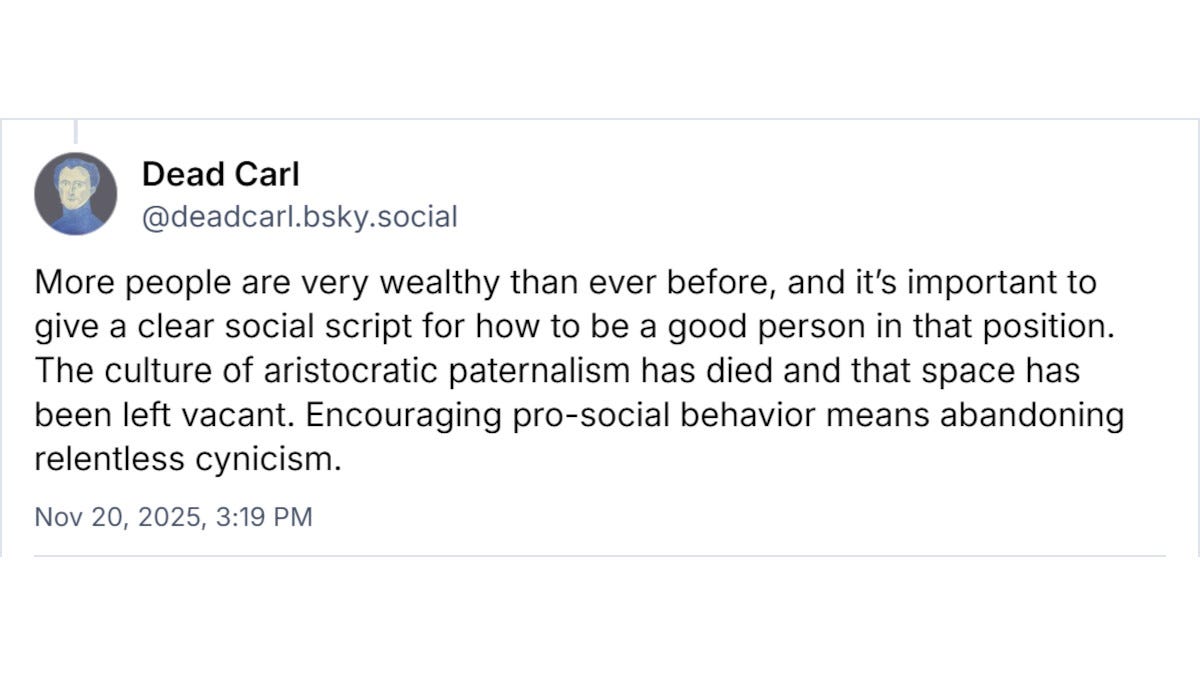
■ Kiran Pfitzner, writing under his pseudonym of “Dead Carl” von Clausewitz, makes the point quite well: “More people are very wealthy than ever before, and it’s important to give a clear social script for how to be a good person in that position. The culture of aristocratic paternalism has died and that space has been left vacant. Encouraging pro-social behavior means abandoning relentless cynicism.”
■ The same goes for all kinds of things that are distributed unequally: We also need social scripts that show how to be a good person when you are unusually intelligent or gifted in other ways. The rogue genius and the abusive auteur should experience social correction. Too many people have tried purchasing their way, if not to respectability, then to social approval, when instead they should have just been (and done) good by virtue of their choices.
■ In the presence of good social scripts, though, we can hold higher expectations of the geniuses, the wealthy, and the influential. Their kinds will always be among us, no matter how much it rankles a character like Bernie Sanders. To argue for abolition of features that will always grow back is a distraction from the real work that needs to be done in calling on people to act virtuously at all times, but especially in ways that rise in tandem with their capacity to do additional good.