Among the various ways to collect revenue for government activities, usage fees tend to be uncommonly popular among economists. Charging the fees to the people who actually use those government outputs tends to satisfy a basic appetite for fairness. Though its efficiency is slipping as electric-powered vehicles continue to expand their market share, the gasoline tax has long been an approximation towards a usage fee for road usage.
■ For several reasons, we ought to reconsider how much we depend upon fuel taxes to cover 91% of the Federal Highway Trust Fund. The chronic incapacity of the fuel tax to keep things adequately funded should be a chief concern, and there’s no reason to believe that the structural reasons are moving towards a correction.
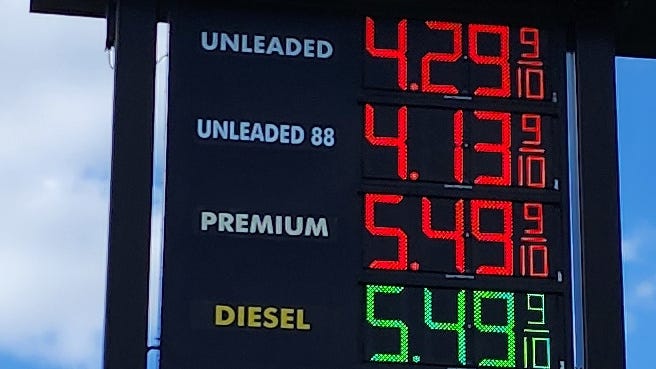
■ Proposals now to cut or suspend the gas tax as a means to offset higher petroleum prices are fairly predictable moves, but they’re no less ill-advised for their predictability. The tax isn’t big enough to turn expensive gasoline into anything other than just-slightly-less-expensive gasoline. Because of how the tax is collected, only some of a cut would actually make it to consumers anyway.
■ And, crucially, cutting the tax wouldn’t do anything about the need it funds. Dismantling a user fee without replacing it with a better one only means that the funds will have to come from somewhere else -- probably a general fund taken out of income taxes -- where it will almost certainly become even less accountable and only rack up interest costs due to deficit spending practices.
■ User fees shouldn’t apply to everything, but they make enormous sense when applied to road construction, maintenance, and replacement. Suspending them should take something more than public grievance over the extremely productive second-order effects of a major tax.