Representative Al Green was removed from the House chambers after unfurling a protest banner at the State of the Union address. The event -- which may be the peak example of meeting that could have been an email, since it quite literally was only a written report for more than a century -- has attracted lots of attention-seeking behavior, in a manner that seems like it has escalated in recent years.
■ And why wouldn’t it? In principle, at least, the address is supposed to be a job report: One delivered by an individual assigned to faithfully execute a job, and received by the one body of people legally authorized to fire that individual. In the Constitutional mechanism of Madison’s imagination, the balance of power favors those audience members. It should surprise no one that some of them would use the event to seek attention of their own.
■ What is a surprise, though, is the general lack of imagination employed by members of Congress. Rep. Green used a handwritten sign. Rep. Jill Tokuda wore a jacket emblazoned with a fist. A considerable number of women chose pink or white outfits in 2025. But nothing to really make a coordinated impression during those wide shots of the full Congressional audience.
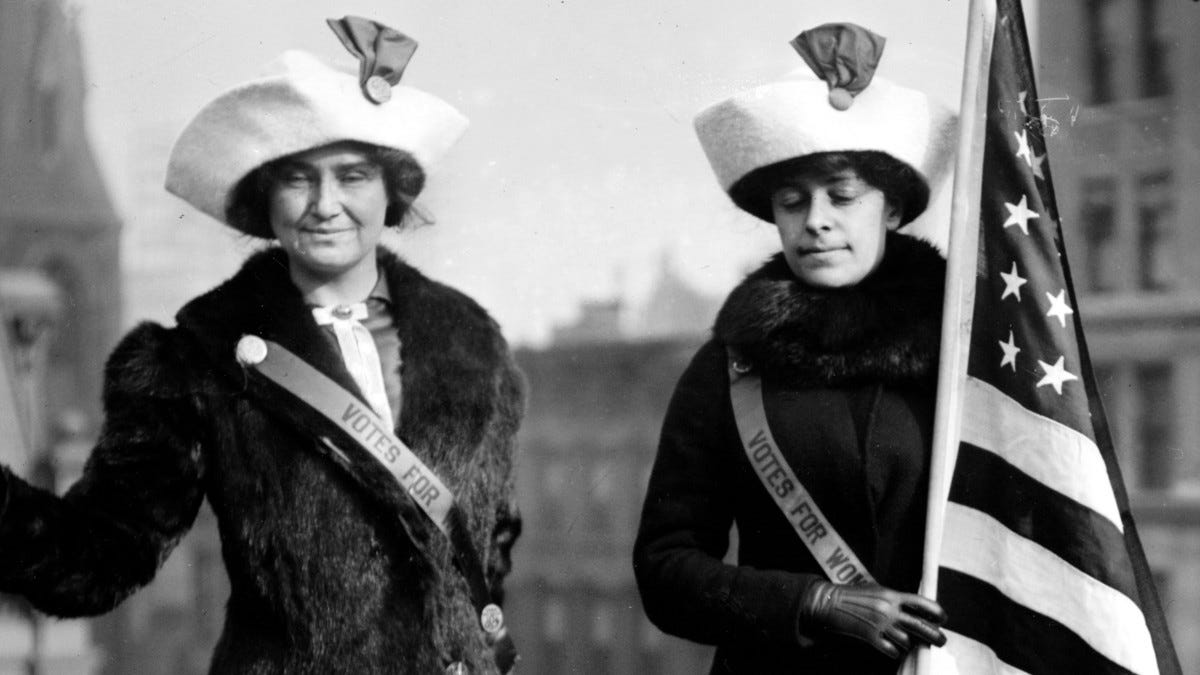
■ Why hasn’t anyone brought back the political sash? The historical precedent of the “Votes for Women” sash worn across the chest is strong -- and in our era of fast fashion and Etsy stores, sashes could be thoroughly tasteful, creative, and timely, not to mention more decorous than what Senator John Fetterman used to wear.
■ Pick a color, a pattern, or a set of stripes. Use words, stick to icons or symbols, or let the colors alone do the talking. It wouldn’t be hard -- probably even easier than trying to coordinate lots of individuals to wear the same outfits. But it would offer a visual that had a chance at making an impression, not to mention one that could be reused many times beyond a single event like the State of the Union.
■ The women who campaigned for suffrage understood: Wear the message relentlessly until it breaks through. If politicians are going to seek attention for their causes anyway, why not make the displays aesthetically tasteful?