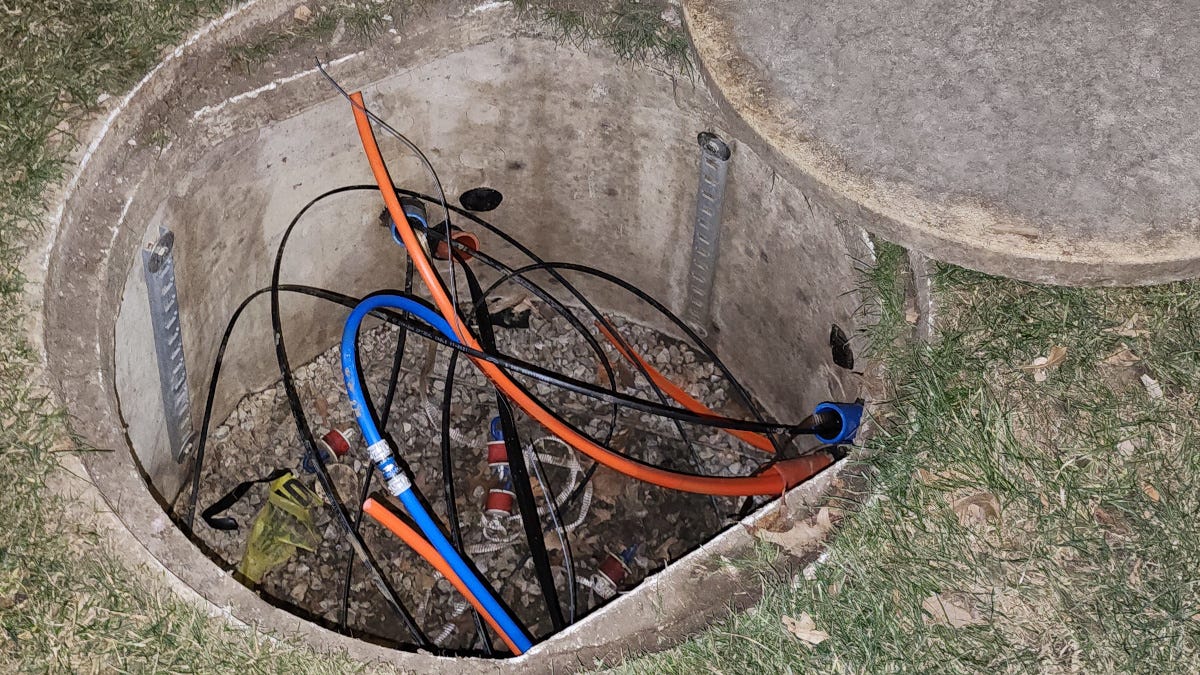
In the movie “Airplane!”, a chaos agent named Johnny casually turns out the runway lights at the airport by unplugging an extension cord. It’s a gag as hilarious as it is improbable. But it also feels, in a small way, like a vision of the structure of the modern Internet.
■ Since many websites and Internet services are scaled up to handle colossal (but highly varied) traffic loads, many depend upon outside vendors to provide hosting services. Among the biggest is Cloudflare, which had an outage yesterday that resulted from a routine attempt to update services to defend against unwanted bot traffic. The disruption affected services at Google and OpenAI, among many others.
■ Cloudflare leadership publicly fell on the sword, and the company has already published a post-mortem that loudly denies any kind of external cyberattack was to blame. (Considering that security is part of their product portfolio, it makes sense that they would be anxious to point this out.
■ It doesn’t change the fact that a very small number of companies have extremely high-impact roles in keeping the Internet working. Mess with operations at WordPress, Amazon Web Services, Cloudflare, and a couple of others, and you can put the Internet on its knees.
■ The problem is, our wildly successful and prosperous country gets so much better off so fast in historical terms that we think everything should fall under the “fix-on-failure” model of maintenance. When your 10-year-old toaster breaks, you throw it away, because a new and better one can arrive on an overnight delivery from Amazon before your next breakfast.
■ But infrastructure doesn’t work like that at all, and few people really get the concept. It’s expensive to properly maintain things, but much less expensive on average than fixing broken things. That’s a hard sell in the public sector, and an even harder sell in the private one, especially in an overheated equities market.
■ But the private sector arguably manages more real infrastructure than the public sector: Power plants, railroads, Internet backbone, you name it. And even if Cloudflare’s depiction of events is 100% true (and there’s no immediate reason to think otherwise), it still doesn’t change the fact that massive Internet failure can cascade lightning-fast from just a few sources. The Internet is essential infrastructure in the modern day. Whether we think about making it more robust is a choice.